 adm1n
adm1nFerragamo Premium Handle Bag Ferragamo Crossbody
Ferragamo Cara: A New Shoulder Bag Built On Architecture
The label’s own site leads with the Cara, and it does so on purpose. The hero navigation is ordered Cara, the Hug, the Soft-bag, new styles, the Studio Bag and the Iconic Top Handle, and with 279 handbags currently listed for the United States that hierarchy is a choice. Within that line sit roughly 90 top handles, 79 shoulder bags and hobos, 36 minis, 33 clutch and evening styles, 27 crossbodies and 19 totes, which is why new ferragamo bags have to earn their place. The Cara carries the Fall/Winter 2026 push: a slim, architectural shoulder bag in two sizes, cut in leather, fastened with the Gancini hardware that has anchored the house’s accessories since the early 1970s. Prices logged on the brand’s US webstore on 7 September 2026 place the extra-small at $3,400, one variant at $4,500, and the small at $3,700. Those figures are observed 2026 market prices for that one day, not an official price list, and they will change. It arrives under Maximilian Davis, creative director of the house since March 2022. What follows sets out what the bag actually is, where it sits among the alternatives and what cannot yet be said about it.
A Silhouette Built From Straight Lines
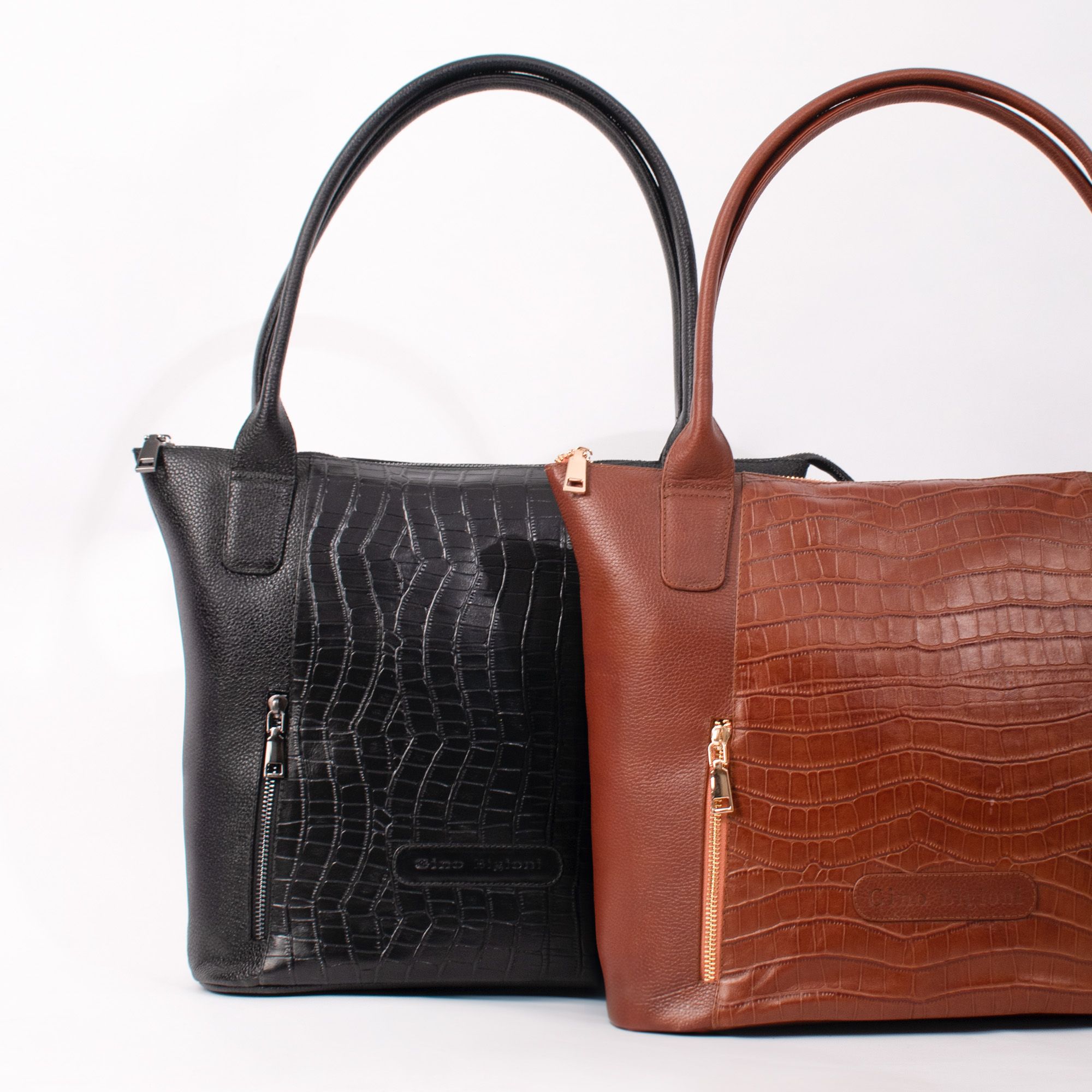
The Cara comes across as architecture rather than luggage, and that is precisely the point. Where most of the current assortment is either structured and folded, as the Hug is, or deliberately slouchy, as the Soft-bag and Hug Soft are, the Cara holds a narrow, flat, disciplined line against the body. It is salvatore ferragamo purse a shoulder bag first, worn high and close, with a profile that stays rectangular whether the bag is full or nearly empty. That discipline is what makes it evening-capable in a way most day bags never manage, and it is by the same token what limits it. Laptops, water bottles and folded scarves do not go into a silhouette this narrow, and buyers who need capacity should be looking at a tote. What the shape buys you is a clean vertical line under a coat and a bag that does not sag into a shapeless mass by the end of the day.
The Gancini Closure, and What It Says
Of every element here, the closure carries the most history, and the brand’s own copy names it as Gancini. There is a documented starting point for the motif, because in 1972 an American trade paper published a photograph of a Ferragamo bag fastened with a hook-shaped metal closure, and that was the first appearance of what became the house signature. The vocabulary has stayed loose ever since, with Gancio used for a single hook, as on the pair of golden buckles fastening the Hug’s wrap straps, and Gancini used for the motif and the family it names. Both spellings belong to the house, both turn up across current product copy, and neither is a red flag when you meet it. On the Cara the hook is doing structural work rather than decorative work, because it is the fastening that holds a flat panel closed without the bulk of a flap or a zip housing. That is a quieter use of the motif than the big turnlock flaps of the archive, and it suits a bag that is trying to look built rather than trimmed.
Its Place on the Price Ladder
The house’s real range for bags runs from roughly $830 to about $4,800, with a thin exotic tail far above that. The Cara’s $3,400 to $3,700 puts it in the upper band, above the Studio Box and the new Sofia and level with the medium Hug, which prices it as a signature piece rather than an entry point. That matters: a ferragamo bag at this level competes not just with the rest of the line but with a second-hand market in which a large suede Hug shoulder bag was observed at $2,930. The table below sets the Cara against the current shoulder alternatives, using prices observed on the brand’s US site on 7 September 2026. Authorised stockists such as Nordstrom, Bloomingdale’s, Saks Fifth Avenue, Mytheresa and Farfetch keep recommended retail, so cross-shopping changes availability more than it changes price. Two points belong together here: a ferragamo sale runs as a seasonal section on the brand’s own site rather than as a standing channel, and a brand-new flagship model is rarely what such a section is clearing, while pre-owned salvatore bags asking similar money are usually larger models in used condition rather than current-season pieces.
| Style | Sizes offered | Official US price observed, Sept 2026 | Character of the bag |
|---|---|---|---|
| Ferragamo Cara | XS, S | $3,400 (one variant $4,500); S $3,700 | Structured and slim, Gancini closure |
| Hug Soft shoulder bag | M, L | $3,400–$4,400; L $3,800–$4,300 | Volume and slouch in soft leather |
| Hug East-West shoulder bag | A single size | $2,500 (some $3,500) | Elongated horizontal, under-arm |
| Ferragamo Soft-bag | S, M | $2,100–$3,500; M $2,950 | Softest and least structured of the set |
| Ferragamo Sofia 2026 | M, L | M $2,700; L $3,200 | An old name revived in current form |
| Ferragamo Studio Soft | M, L, East-West M | $3,200–$3,600 | Canvas, raffia effect and hammered leather |
Cara or Hug: The One Comparison Worth Making
For most buyers the actual choice is Cara or Hug, and the two bags answer different questions. The Hug is the house’s established modern icon, an asymmetrical structured top handle with folding side panels, two golden Gancio buckles on the wrap straps, a detachable strap and a keychain charm on the zip ring. It is the model that dominates the current assortment across top handles, shoulder bags and crossbodies, and it is the model with the strongest observed second-hand retention. The Cara carries none of that history and makes no attempt to compete on volume or hardware theatre. It is narrower, flatter and quieter, and it is worn differently, on the shoulder rather than in the hand. Made in Italy and sharing a hardware vocabulary, the two differ on shape and habit rather than on quality. Want the bag people recognise across a room? The Hug is still that bag. Want the one that disappears into a silhouette? The Cara is the newer answer.
Making, Materials and What the Page Actually Says
Like every current bag in the line, the Cara is produced in Italy, and the brand states as much on each product page. Its material is leather, with the gold-tone hardware finish used across most of the collection, and the two sizes are the only structural variables offered. The product page also carries a two-part product code, a style code plus a variant code, which identifies the model and colourway rather than the individual bag, and it is worth understanding that distinction before reading too much into it. Be blunt about what the house does not publish: there is no public authentication guide and no public bag-care manual, which means any specific claim about hidden codes or cleaning routines comes from outside the brand. Repair Services are what the house does offer, for a selection of authentic products, requested at selected stores with proof of purchase. For a bag bought new that is the aftercare route, and it holds regardless of the country or channel of purchase.
Who It Suits, and What Is Still Unknown
The Cara suits someone who already owns the practical bags and wants a disciplined evening-to-dinner shape rather than another daily carrier. It rewards a wardrobe of clean lines and punishes an overpacked life, so be honest about which one you have before spending at this level. Try both sizes in a ferragamo shop if you can, because the difference between extra-small and small is the difference between a phone-and-cards bag and a genuinely usable one. How the model will behave over time is the one thing nobody can tell you yet, because it has no meaningful second-hand track record and talk of future value is speculation, not analysis. That is not a criticism of the bag, merely the position every new model occupies for its first several seasons. Buy it because the shape is right, note that resale platforms still file the house under Salvatore Ferragamo when you go looking for comparisons, and let the market work out the rest in its own time.